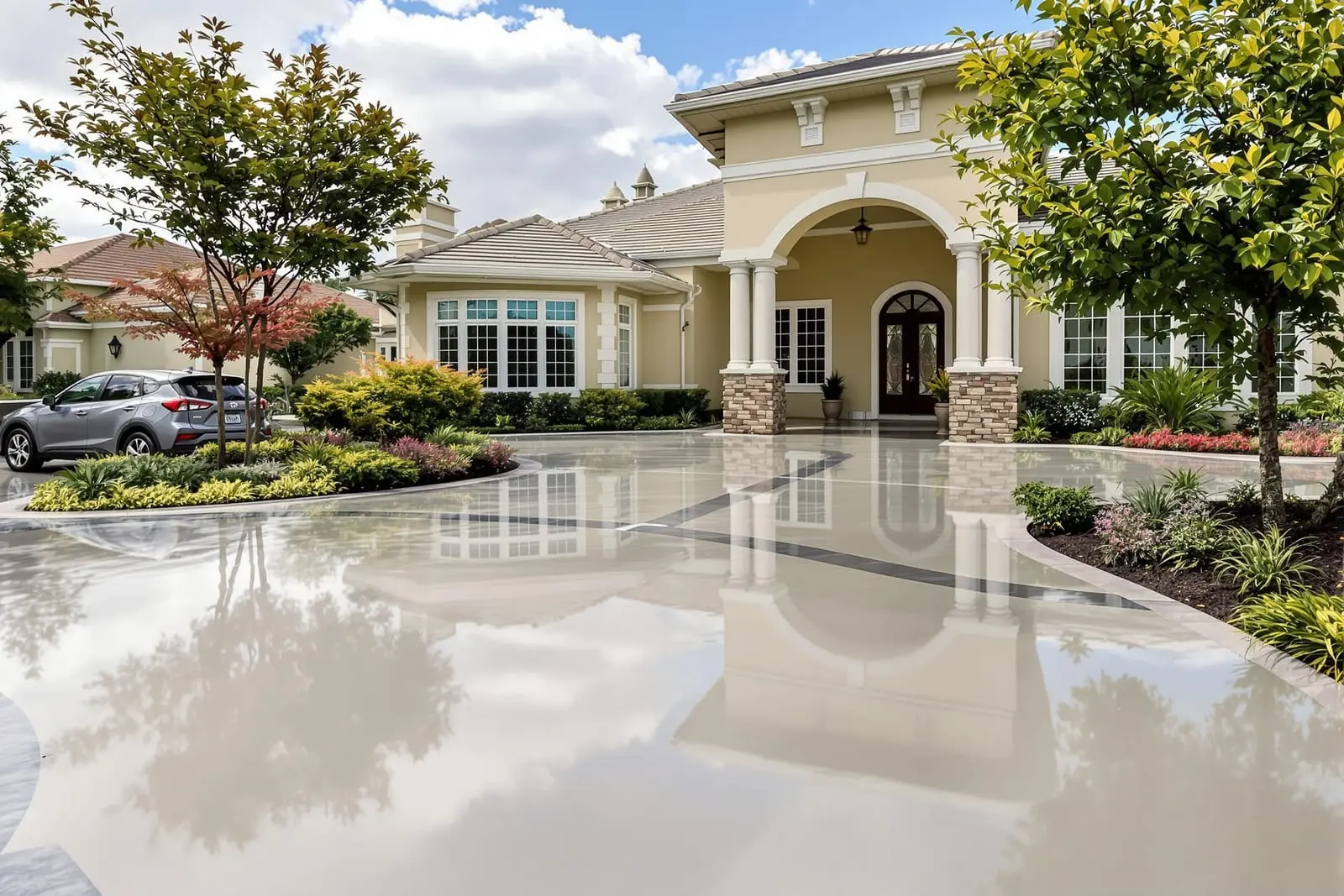
Protect your investment with commercial concrete sealing in Port Charlotte, FL. We apply sealers and coatings to floors, sidewalks, and exterior slabs to resist chemicals, stains, and heavy traffic. Options range from clear sealers to colored coatings that improve safety and appearance.
Primetime Concrete Port Charlotte provides professional commercial concrete sealing throughout Port Charlotte, FL and the surrounding area. Our licensed, insured crew delivers safe, clean, on-time work with a free estimate before anything begins. Call (941) 206-9836 or request your free quote.
Commercial Concrete Sealing Built For Port Charlotte Properties
Commercial concrete in Port Charlotte works hard. Between high UV exposure, daily rain in the summer, salt in the air, and constant vehicle traffic, unsealed slabs wear out faster than most owners expect. Primetime Concrete Port Charlotte focuses on commercial concrete sealing that is designed for local conditions and the specific way your property is used.
We work on shopping centers along Tamiami Trail, medical and office buildings near the hospital, industrial yards, restaurant patios, HOA common areas, and multi‑building complexes. The right commercial concrete sealing system for a shaded, always‑wet loading dock is not the same product we recommend for a sun‑baked bank drive‑thru, so we do not use a one‑product‑fits‑all approach.
Before we quote anything, we look at how the slab was poured, the age of the concrete, drainage patterns, and what kind of abuse it takes, such as grocery carts, forklifts, or delivery box trucks. This lets us choose sealers and coatings that will actually perform instead of just looking good for a few months.
How Our Commercial Concrete Sealing Process Works
Effective commercial concrete sealing is about preparation and timing. Primetime Concrete Port Charlotte follows a step‑by‑step process so coatings last instead of peeling.
1) Site inspection and moisture checks: We inspect the concrete for previous coatings, oil contamination, cracks, and hollow or delaminated areas. In coastal Florida, vapor coming up through the slab is a real problem, especially in older plazas. We can perform moisture tests so we do not trap vapor under a coating that is not breathable.
2) Deep cleaning and surface profiling: We start with degreasers on oil spots at parking stops, dumpster pads, and drive‑thrus, then mechanically scrub and pressure wash. For coatings that need a profile, we can grind the surface to open the pores so the sealer keys into the concrete instead of just sitting on top.
3) Repairs before sealing: Cracks, spalls, and control joints are repaired using proper patch materials, not just caulk. If forklifts or heavy trucks are involved, we use higher strength repair mixes in traffic lanes so they do not crumble under turning loads.
4) Product selection and application: Based on your needs, we apply the best system for that area, using sprayers, rollers, or squeegee techniques that match the product. We control coverage rates carefully, since applying sealer too thick is a common cause of failure.
5) Curing and return‑to‑service plan: Concrete sealing cures differently in summer humidity than in a cool, dry climate. We plan sections so your business stays open, using detours, overnight work, and early morning start times to minimize downtime while the product cures properly.
Sealer & Coating Options That Actually Fit Your Use
Not every commercial concrete needs the same level of protection. Primetime Concrete Port Charlotte explains the options in plain language so you can choose what makes sense for your budget and risk level.
Penetrating sealers: These are usually silane, siloxane, or blended formulas that soak into the slab and chemically react. They are ideal for parking lots, sidewalks, and stairs where you want water and salt resistance without changing the look or creating a film on top. They are breathable, which helps in our humid climate and reduces blistering.
Acrylic sealers: Common for decorative concrete such as colored walkways and stamped entry plazas. They enhance color, add a slight sheen, and are cost‑effective. We use commercial‑grade, UV‑resistant acrylics that handle Florida sun better than hardware store products, and we can add grit to reduce slipping when wet.
High‑build coatings: For warehouses, showrooms, commercial kitchens, and service bays, we install heavier systems such as epoxy primers with polyaspartic or polyurethane topcoats. These are thicker, more chemical resistant, and can handle hot tire pickup from vehicles. In auto or marine uses, we specify products that resist transmission fluid, oils, and mild solvents.
Non‑slip systems: Around pools, outdoor dining, and sloped ramps, we incorporate non‑slip textures directly into the sealer or coating. The level of texture can be adjusted so customers with carts or walkers can still move safely while the surface stays grippy in rain.
What Affects Cost For Commercial Concrete Sealing
Owners often want a quick price per square foot, but the real cost of commercial concrete sealing depends on conditions on your specific property. Primetime Concrete Port Charlotte walks you through the price factors so you understand where your money is going.
Existing coatings or failing sealer: Stripping off old, peeling sealer or incompatible coatings takes extra labor and sometimes special chemicals or grinding. A clean, never‑sealed slab is faster and cheaper to prep than one that has been sealed several times with poor‑quality products.
Contamination level: Dumpster pads, restaurant service alleys, and old auto service areas often have deep oil and grease. To get a new coating to bond, we use strong degreasers and repeated cleaning, which adds time. If stains have soaked far into the slab, we may recommend a more forgiving, penetrating system instead of a decorative coating.
Repair needs: Cracked or broken concrete must be stabilized before sealing. Joint rebuilding, patching at dock edges, and correcting minor settlement can add cost, but it avoids wasting money on a coating that will fail as the damaged concrete continues to move.
Product type and performance level: A simple penetrating sealer costs less than a multi‑layer coating system that resists forklift traffic and chemicals. We match the system to how long you plan to stay in the property, your risk tolerance for slips, and how often you can realistically shut down for re‑coating.
Access and phasing: Tight working areas, nighttime only access, or complex phasing to keep half the lot open can influence pricing. We design staging that balances cost with keeping your operations functional.
Local Conditions That Matter For Port Charlotte Commercial Concrete
Port Charlotte commercial concrete faces specific issues that owners from other regions do not always expect. Primetime Concrete Port Charlotte plans sealing and coating work around those local realities so you get longer life out of each project.
Strong UV and heat: Open parking fields and drive‑thrus along US‑41 sit in direct sun all day. Many cheaper sealers yellow, powder, or lose gloss quickly in these conditions. We prioritize UV‑stable resins for exposed areas and set realistic expectations about how the finish will age.
Frequent heavy rainfall: Afternoon storms mean surfaces cycle from hot and dry to soaked in minutes. Sealers must resist water intrusion but also allow moisture vapor to escape from below. On shaded north‑facing sides of buildings, we consider mildew resistance and non‑slip additives carefully so wet algae growth is easier to manage.
Coastal air and occasional salt exposure: Even if your property is not on the water, salt spray and coastal air can still reach parking lots and ground‑level decks. Penetrating sealers that reduce chloride intrusion help protect reinforcing steel inside the slab, especially on elevated walkways and balcony entries.
Mixed‑age buildings: Port Charlotte has older plazas with original slabs next to newer out‑parcel buildings. That means different densities, finishes, and joint layouts across the same property. We may specify one sealer for older, more porous concrete and a different system for newer, tighter concrete so the final result wears more evenly.
What To Ask Before You Hire A Commercial Concrete Sealing Contractor
Choosing the right contractor is as important as choosing the right sealer. Primetime Concrete Port Charlotte encourages property managers and owners to ask specific questions, even if you do not end up hiring us.
Ask about surface preparation: A contractor who talks only about the sealer product and not about grinding, cleaning, or repairs is skipping the most important step. For commercial projects, you should hear a detailed plan for prep, including how they will handle oil spots and existing coating removal.
Confirm product type and limitations: Make sure you know whether you are getting a penetrating sealer, acrylic, epoxy, polyaspartic, or another type. Each has strengths and weaknesses. You should receive data on cure times, slip resistance options, and maintenance requirements.
Discuss traffic and downtime: A good plan includes how foot and vehicle traffic will be controlled while the sealer cures. On retail properties, we often schedule in segments so at least one main entrance and key parking rows remain open. This should all be spelled out in writing before work begins.
Review warranty and maintenance: Ask how long the system should reasonably last under your specific use, and what maintenance is required. Some high‑build systems benefit from clear topcoat renewal every few years instead of waiting for full failure and a complete redo.
If you manage a property in Port Charlotte or nearby communities and need commercial concrete sealing or coatings that will hold up in this climate, contact Primetime Concrete Port Charlotte. We will inspect your concrete, explain practical options, and build a plan that fits your operations instead of disrupting them.
“
Professional commercial concrete sealing & coatings, done right the first time, quality materials, honest pricing, and results that last.
Primetime Concrete Port Charlotte
Commercial Concrete Sealing & Coatings Across Our Service Area