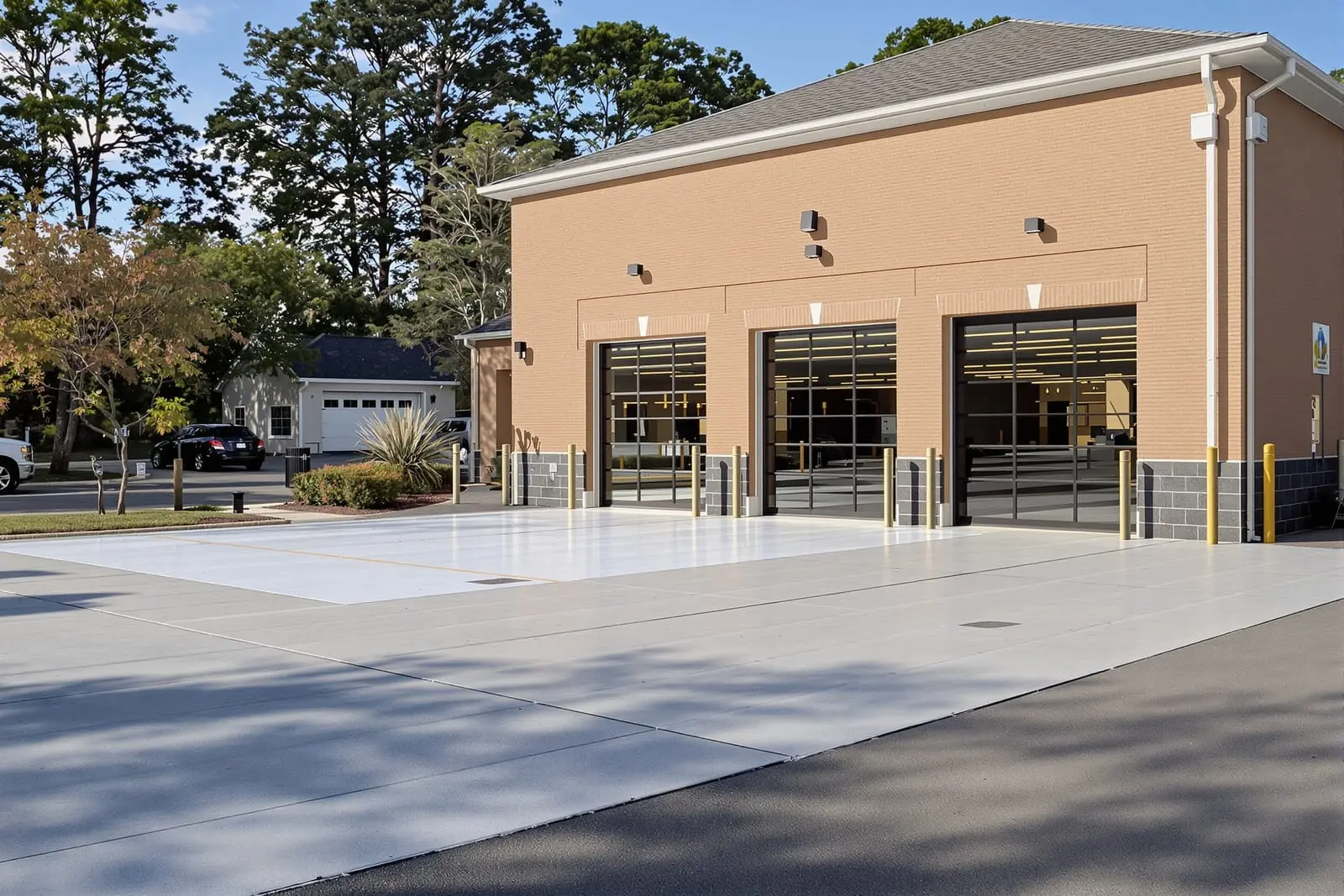
Keep shipping moving with sturdy commercial concrete slabs in Port Charlotte, FL for loading docks and service areas. We build thick reinforced slabs that can handle trucks, trailers, and forklifts without premature failure. Dock heights and slopes are coordinated with your building and equipment.
Primetime Concrete Port Charlotte provides professional commercial concrete slab throughout Port Charlotte, FL and the surrounding area. Our licensed, insured crew delivers safe, clean, on-time work with a free estimate before anything begins. Call (941) 206-9836 or request your free quote.
Loading Docks & Commercial Slabs Built for Port Charlotte Businesses
Primetime Concrete Port Charlotte designs and installs commercial concrete slabs and loading docks that match how your business actually operates, not a generic plan copied from somewhere else. In Port Charlotte, that means concrete that can handle year-round heat, salt in the air, and heavy delivery traffic without shifting, cracking, or ponding water.
Whether you run a distribution warehouse off US-41, a marine supply shop near the harbor, or a grocery store that gets daily semi deliveries, the layout and performance of your slab and loading dock affect how safely and efficiently trucks move through your site. We look at turning radius, trailer approach angles, forklift paths, pallet jack use, employee walkways, and drainage patterns, then design the slab and dock as a working system instead of a stand-alone pad.
From recessed loading bays behind retail centers to elevated docks sized for 53-foot trailers, our focus is building concrete that performs under real-world conditions in Charlotte County, not just concrete that looks good on day one.
How We Plan Your Commercial Concrete Slab or Loading Dock
Every project with Primetime Concrete Port Charlotte starts with an on-site walkthrough. We measure existing grades, check truck access, look at neighboring properties, and identify how water currently moves across your lot. Port Charlotte’s flat terrain and intense summer storms make drainage design a top priority, especially around dock doors where standing water can become a slip hazard.
We ask specific questions about your operations. What types of trucks arrive (box trucks, day cabs, full-size semis)? How often do you receive shipments? Do forklifts drive from inside your building directly onto the dock apron? Do you expect future expansion or heavier loads? Your answers help determine slab thickness, reinforcement, and the best layout for approach lanes and turning areas.
From there, we coordinate with your architect, general contractor, or building owner when needed. If the slab ties into a new metal building or an existing structure, we review column locations, door thresholds, and interior floor heights so the exterior concrete matches up cleanly with your building and avoids trip edges or poor transitions.
Concrete Specs That Stand Up to Heavy Loads
For loading docks and commercial slabs, we typically recommend a 4,000 to 5,000 psi commercial concrete mix with air entrainment for durability. In high-traffic truck lanes, dumpster pads, and dock aprons, we often step up to thicker sections and heavier reinforcement to prevent rutting and structural cracking.
Rebar or welded wire reinforcement is placed according to load requirements. Light delivery traffic and pallet jacks call for different reinforcement than daily forklift use and tandem-axle trailers. We pay close attention to rebar chairs and spacing so the steel sits in the correct position within the slab, not resting on the subgrade where it does little to prevent cracking.
Control joints are laid out in a grid that fits the building and loading pattern. Thoughtful joint placement helps minimize random cracking and also directs surface water away from dock doors and building foundations. Around dock levelers, bollards, and door tracks, we add extra steel and detail the concrete to protect these high-stress zones from chipping and failure.
Subgrade, Drainage, and Dealing With Florida Soil
Southwest Florida’s sandy soils and occasional soft pockets can be unforgiving under commercial loads. Primetime Concrete Port Charlotte begins every slab and loading dock project with careful subgrade evaluation. We proof-roll the area, compact the soil to specified densities, and bring in base materials where needed to create an even, well-supported platform for the concrete.
Crushed aggregate base is often added and compacted in lifts to reduce settlement and tire ruts in high-traffic areas. Around dock faces and at the transition from asphalt drive lanes to concrete dock aprons, we pay close attention to matching elevations and preventing future edge failure.
Drainage is designed around Port Charlotte’s heavy downpours. We slope concrete away from the building, often at 1 to 2 percent, and use trench drains or inlets where needed to capture water at the base of dock doors. This helps keep water out of the building, prevents algae buildup in shaded dock wells, and reduces slip hazards for employees and drivers.
Loading Dock Types, Features, and Options
Loading docks in Port Charlotte vary widely, and we customize the concrete around the equipment and operations you rely on. For raised docks that use dock levelers, the concrete forms the pit or supports the face where the levelers mount. We construct those areas with thicker concrete, dense reinforcement, and precise dimensions so dock equipment sets correctly and lasts longer.
For ground-level roll-up doors that rely on portable dock plates, we build thickened edge slabs at the threshold to handle concentrated wheel loads and prevent spalling. If you handle refrigerated goods or medical supplies, we can detail the slab edges to work with insulated door systems and seals to help maintain temperature control.
Additional options include heavy-duty aprons for trash compactors and dumpsters, bollard foundations to protect dock doors and walls, and pedestrian ramps with compliant slopes and handrail footings. Each feature is designed to work with your building envelope so water sheds properly and traffic flows safely and efficiently on delivery days.
Permits, Inspections, and Local Code Considerations
Commercial concrete slabs and loading docks in Port Charlotte usually require permits, especially when tied to a building or affecting drainage. Primetime Concrete Port Charlotte is familiar with Charlotte County Building Department procedures, typical plan review questions, and the inspections needed to close out a project.
We coordinate with your design team or engineer to ensure submittals include slab thickness, reinforcement details, elevations, and drainage plans that meet local code and stormwater requirements. In some cases, site improvements trigger additional review of parking layouts, ADA access, and fire lanes. Addressing those early prevents delays during construction.
During the work, we schedule any required inspections, such as footing or slab inspections before the pour. We keep you informed about inspection timing so it does not interfere with your business operations more than necessary. For projects in managed parks or condo associations, we can also provide drawings and specs that help secure HOA or property management approval.
What Affects Cost and How We Keep Projects Moving
The cost of a commercial concrete slab or loading dock is driven by several practical factors: slab size and thickness, reinforcement type, subgrade conditions, drainage requirements, and how much demolition or tie-in work is involved with existing pavement or structures. In Port Charlotte, access to the work area can also affect pricing, for example tight rear alleys behind retail plazas or limited staging space at medical or office complexes.
Primetime Concrete Port Charlotte starts with a clear, written scope so you know exactly what is included: excavation, base prep, formwork, rebar, concrete placement, finishing, curing, sawcutting, and cleanup. If we expect potential issues like soft subgrade or hidden utilities, we explain them upfront and outline how they would be handled if encountered, instead of surprising you later.
To keep your business running, we often phase work. That might mean pouring one half of a truck lane at a time, scheduling pours early in the morning to reopen access by afternoon, or using barricades and clear signage so deliveries can continue safely. Our goal is to leave you with a durable, well-drained commercial concrete slab and loading dock that supports your operations every day, without dragging the construction process out longer than necessary.
“
Professional loading docks & commercial slabs, done right the first time, quality materials, honest pricing, and results that last.
Primetime Concrete Port Charlotte
Loading Docks & Commercial Slabs Across Our Service Area